PHANTOM EMPIRES
  • MOVIES
  • OLD TIME RADIO
  • US TV
  • UK-TV
  • MOUNTIE PULP!
  • BOOKS
  • ARTISTS
  • ALMANAC
  • My Fiction
  • contact

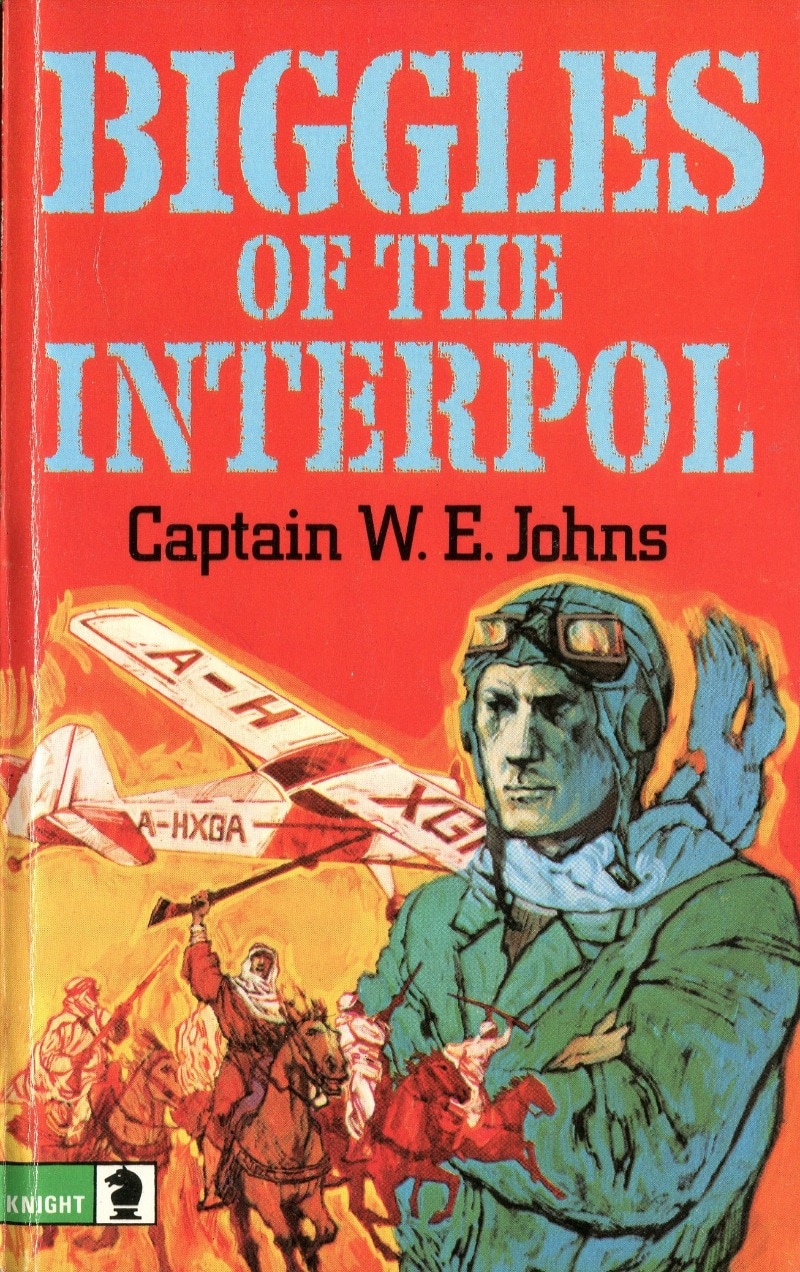
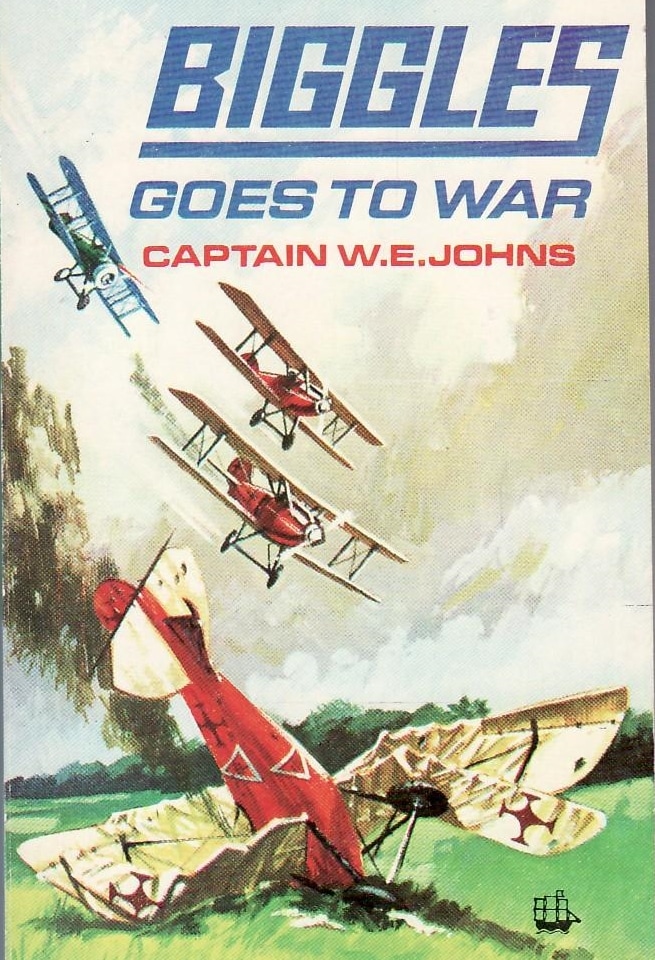
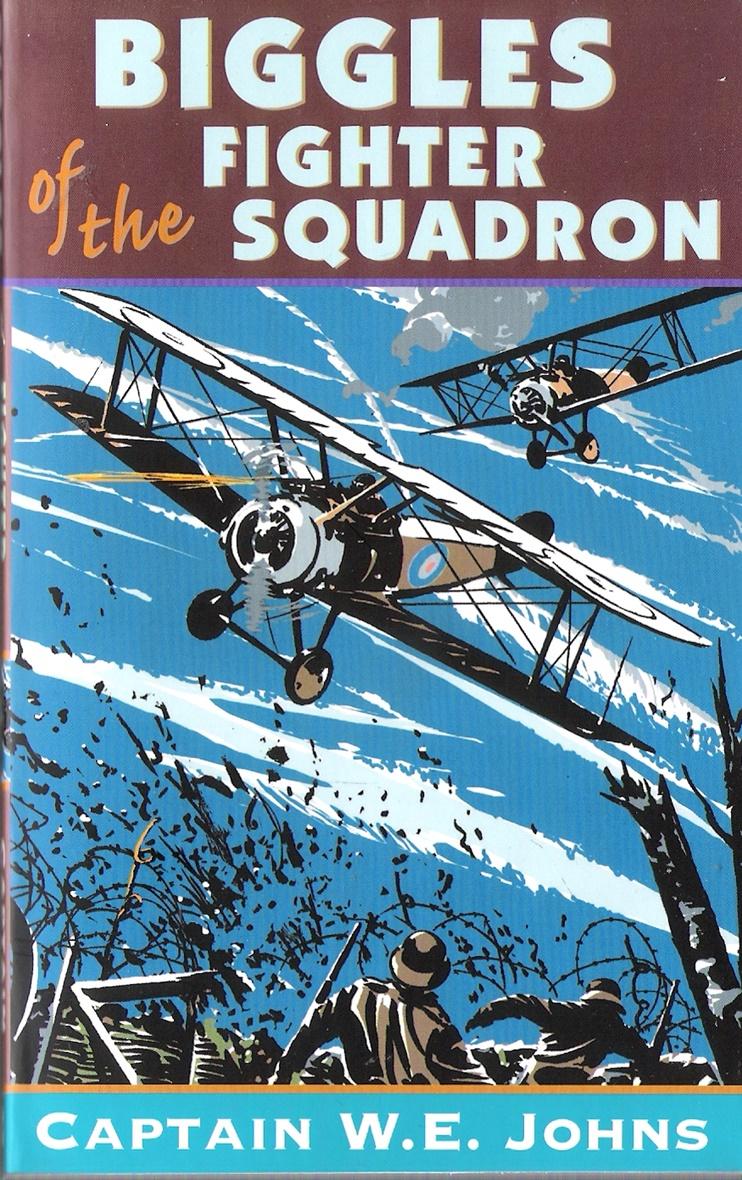
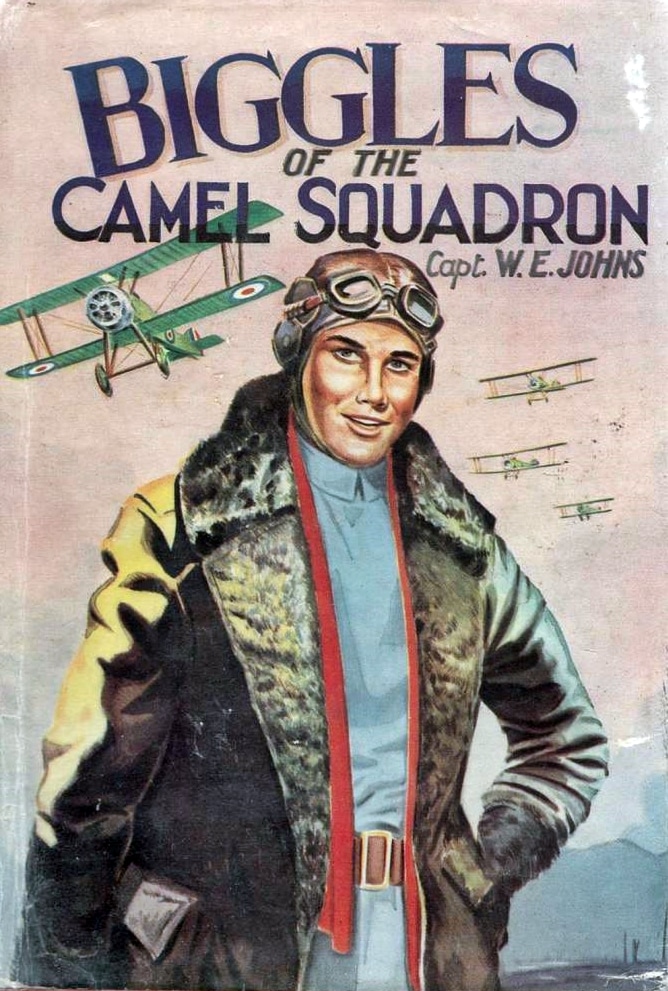
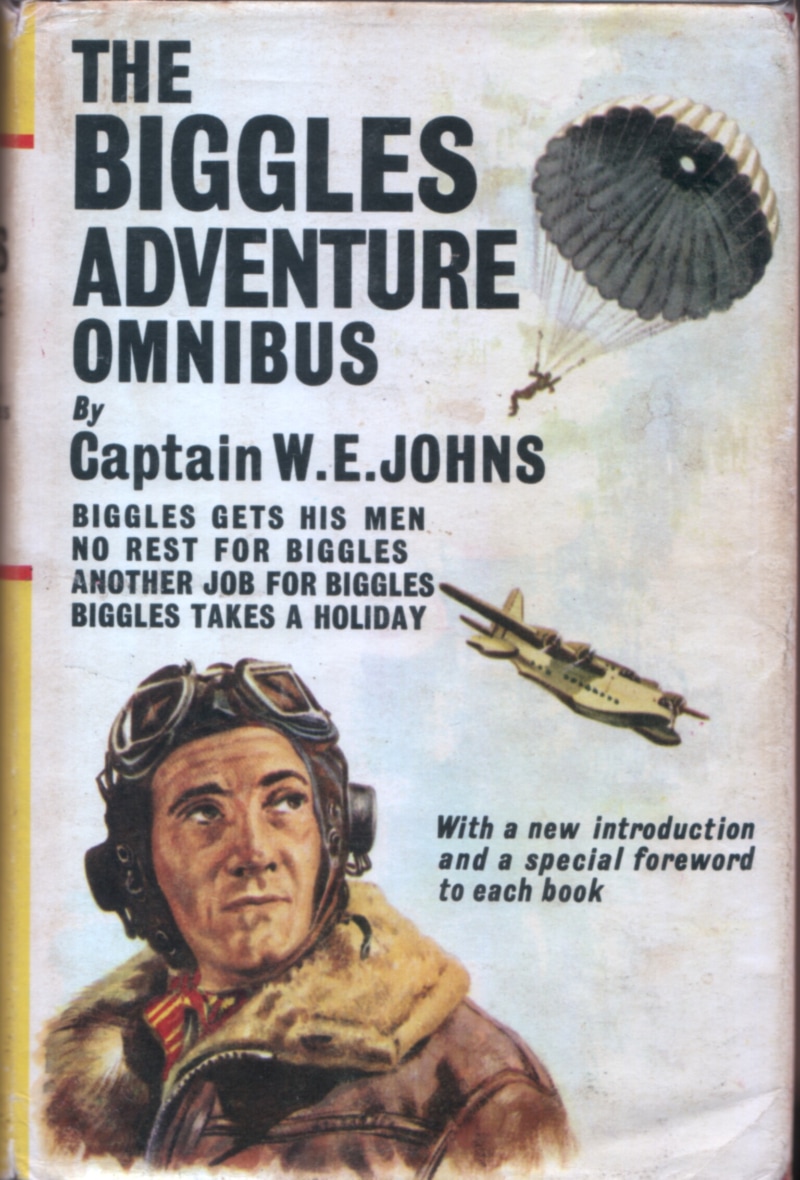
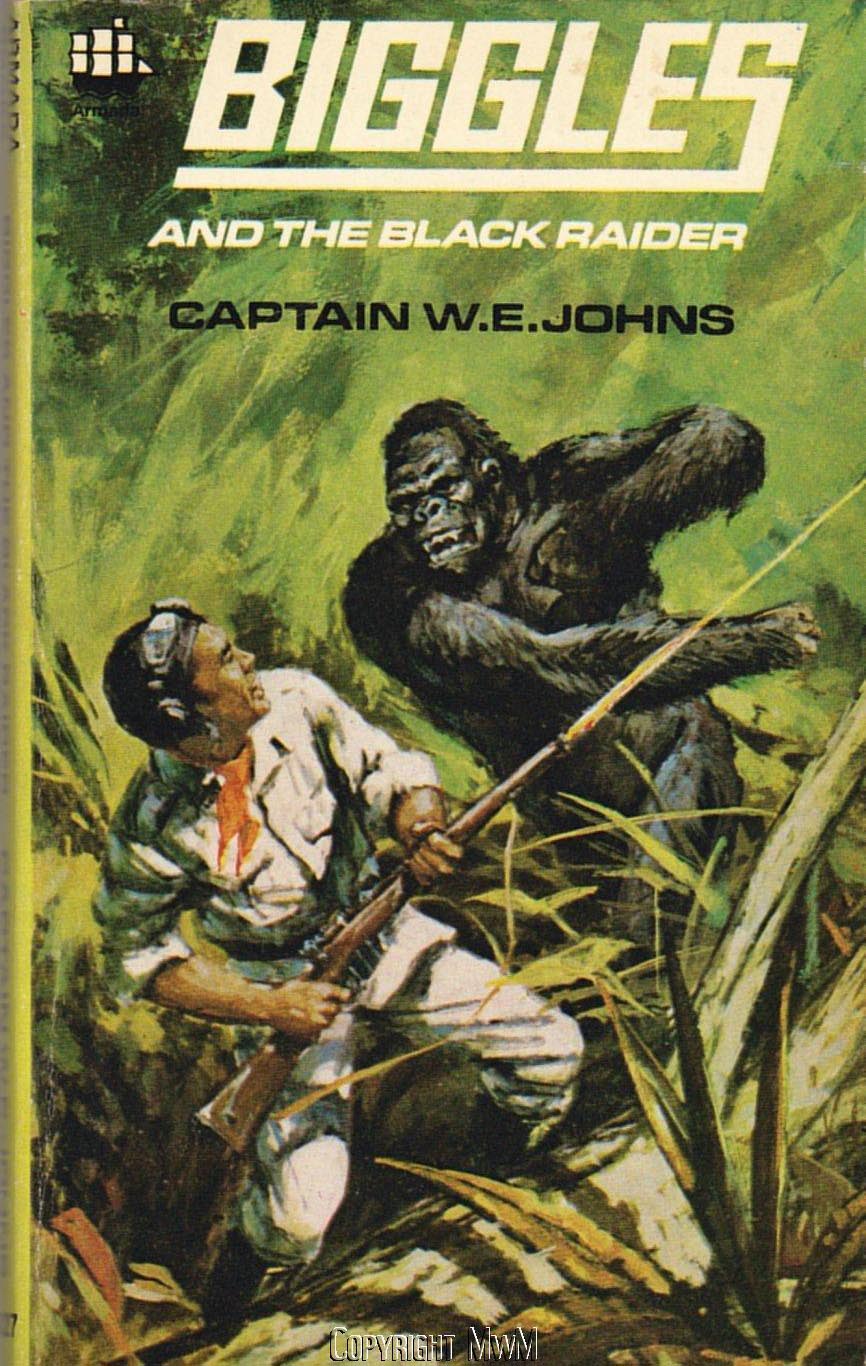
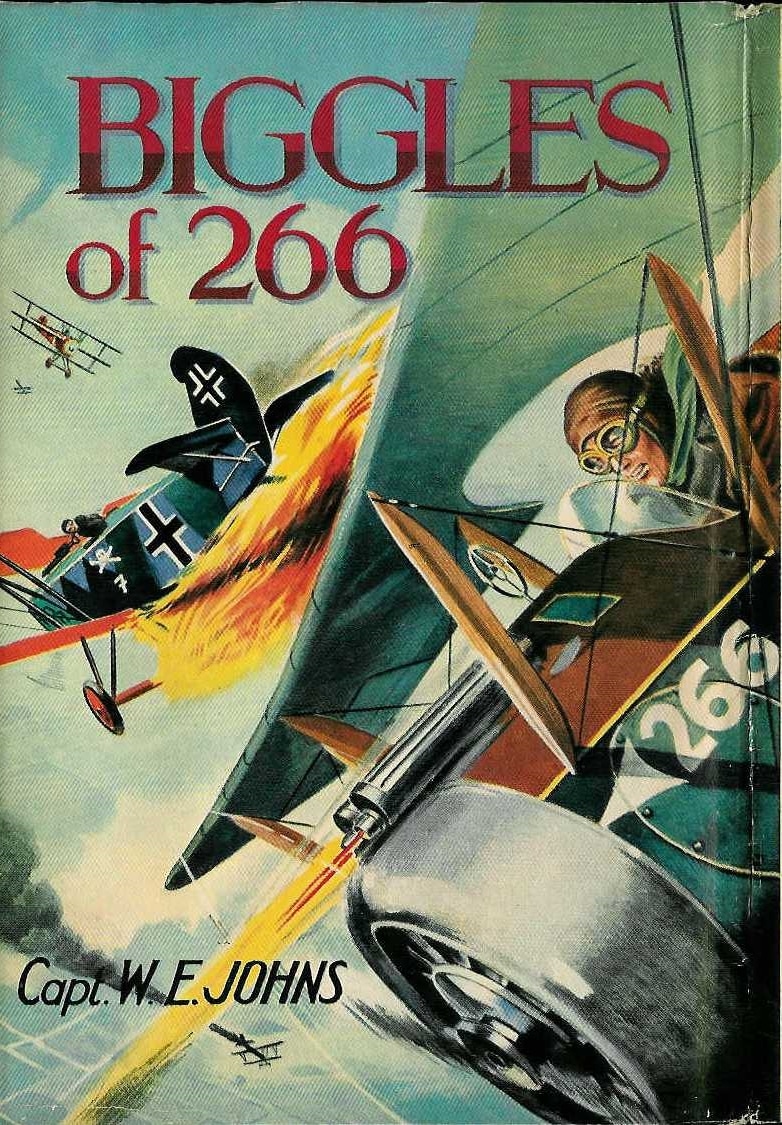
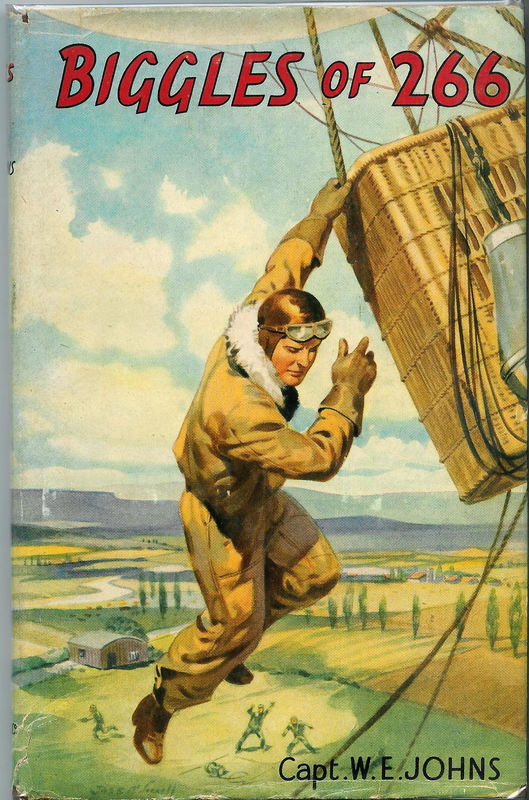
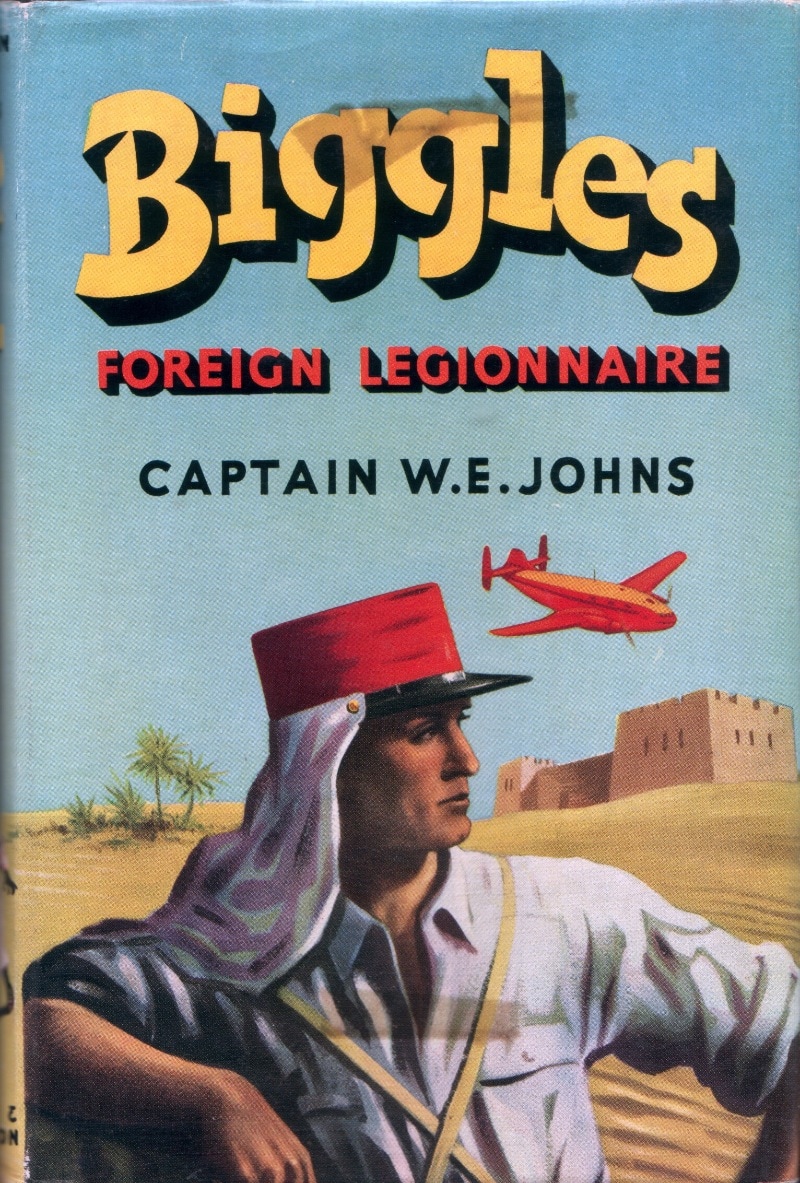
Biggles, by W. E. Johns - John Buchan for Boys!

5/10/2017

0 Comments

 
Picture
As I approach the age of fifty,  I am finding an interesting set of cyclical patterns happening in my life.  I've begun the process of shedding vast amounts of useless personal experiments,  while simultaneously acquiring the various bits of colour that have remained in my memories.  These lasting things are a hard-wired part of my individual experience;  books,  pulp magazines, radio dramas, childhood hobbies...the whole nine.  I'm finding that,  in the process,  I'm regurgitating long-forgotten magic hidden deep.  Things are popping up that haven't been available to me since early childhood,  and as I harvest the internet of all it's amazing spoils,  I run into things that are lost bits of my history.

One of those things recently rediscovered is the character James Bigglesworth,  called 'Biggles' by his pals.  What a much-welcomed treat!

If you're British or Australian,  nothing here will likely be new to you;  Biggles is an old school children's literary institution.  They're as ingrained as the 'Boy's Own' phenomenon,  and they're filtered into modern times through parody, on such television shows as Monty Python's Flying Circus and The Thin Blue Line (though seen a typically unflattering modern lens). To Americans,  Biggles is a bit like G.I. Joe;  a character that everyone remembers,  and a part of the childhood of a great many people,  particularly of a certain age.

Biggles,  initially a WWI fighter pilot,  was created by actual fighter pilot,  Captain William Earl Johns.  Johns was very involved in the fighting during WWI.  He fought in Gallipoli,  was posted to Greece, and after a bit of malaria,  was sent back to England, where he trained as a pilot.  He returned to the fight for the rest of the war.  It's pretty exciting stuff.   Read more about him HERE.  This is magnificent source experience for a pilot adventurer, wot?  Being a huge John Buchan fan,  with his exciting WWI tales of intrigue featuring spy/Adventurer Richard Hannay,   Biggles is just my sort of thing.

Biggles,  in a practical sense,  is a bit of an immortal. Though he began his  life during the first war,  he went on to inter-war private adventures, then to fight in WWII, a stint in the foreign Legion, and on to the Special Air Police of Scotland Yard.  He's one of the few characters that have fought the Kaiser, Hitler, and the cold war commies, while also taking on various international villains and despots.  He's quite a chap.  Bigglesworth doesn't only rule the skies, either.  No villain is safe from his delivery of justice, no matter where they operate;  jungles, deserts, and all manner of secret compound and mountain redoubt.

Like Buchan's Hannay,  with his school chum/spy friend Sandy Arbuthnot, the American John Blenkiron, and MP Sir Edward Leithen, Biggles also had his own cadre of stiff-upper-lipped, square-jawed chums.  He had the intrepid Ginger Hebblethwaite,  his cousin Algy Lacey, boxer Tug Carrington,  monocle-sporting pilot Lord Bertie and mechanic Sgt. Smyth. They are the companions of his adventurous life,  saving him on many occasions.  Each of these fellows embody all the good  values, offering virtuous role models for children, mainly boys, to look up to and emulate.

It's unfortunate that this sort of honest, clean action has gone out of favour in this cynical, post-modern age.  Populated by brave, moral characters,  without a trace of irony,  I believe that these kinds of books are sorely needed today.  I was profoundly affected by old school adventure books;  A. Conan Doyle's THE WHITE COMPANY,  Jane Porter's THE SCOTTISH CHIEFS.  J. Fenimore Cooper's LEATHERSTOCKING TALES,  Johnston McCulley's Zorro novel, THE CURSE OF CAPISTRANO, and so forth.  They informed my worldview in so many wonderful ways.

The good news is that the books are very much still available today,  in both book and digital format.  For a taste of  these great stories,  I've provided links to PDFs for your enjoyment.

Read Biggles of the Special Air Police HERE
Read Fighting Planes and Aces, by W. E. Johns HERE
0 Comments

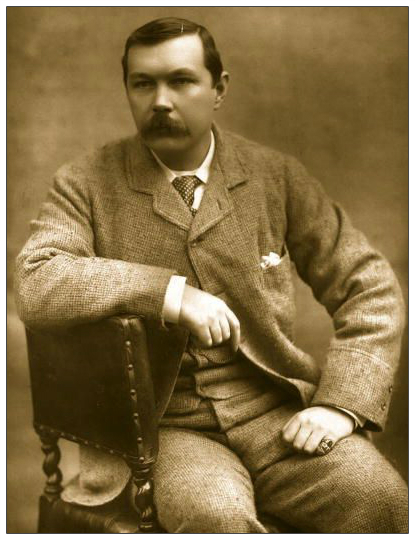
Arthur Conan Doyle (May 22, 1859) - Happy Birthday!

5/22/2014

1 Comment

 
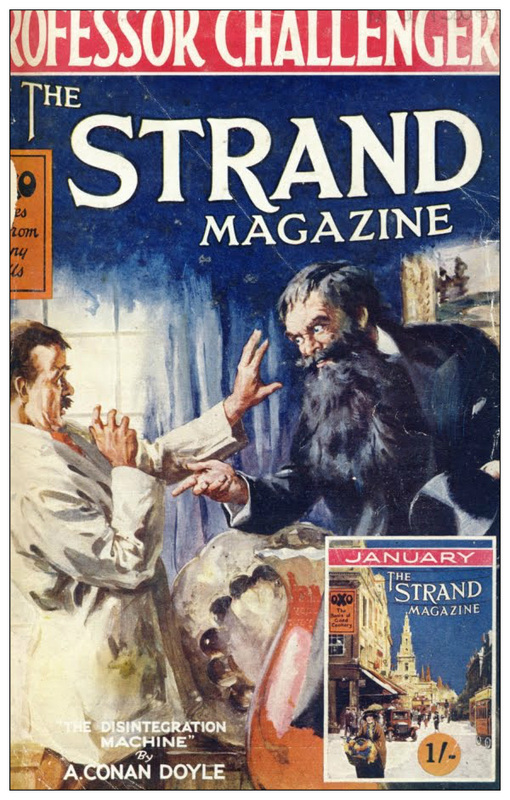
One might expect,  on the birthday of Sir Arthur Conan Doyle,  that the bulk of an article celebrating the occasion would be packed with nods to his most famous creation, the consulting detective, Sherlock Holmes.  Well,  not this time.  True,  Doyle buttered his bread with his Holmes earnings,  and also true is the fact that that character is known to the bulk of the human race,  but the man,  Doyle,  was much more than merely the lens through which the world received those stories.

Arthur Conan Doyle was one of the fireball humans of his day.  Besides being a writer,  he was also an avid sportsman and advocate of healthy living,  he was a qualified physician, he fought for righteous social and political causes,  and, later in life, he became a mystic of sorts...pursuing the possibilities of the supernatural.
Picture
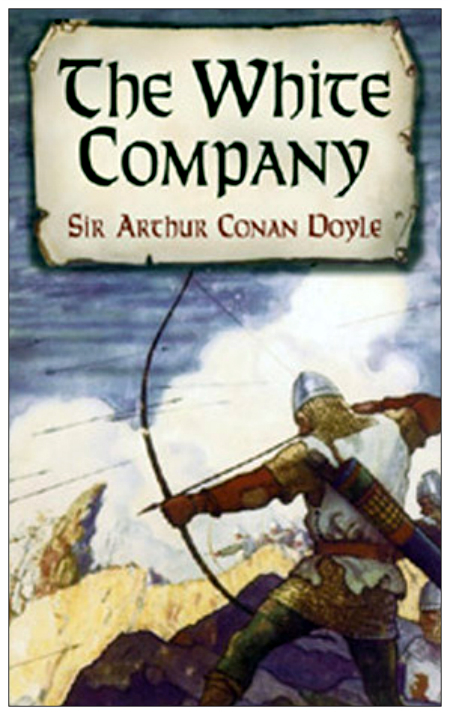
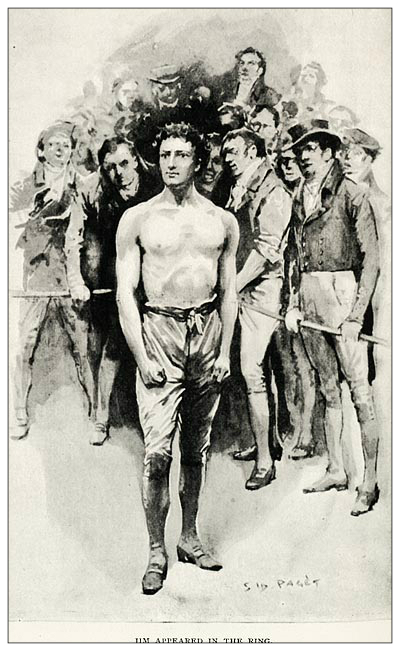
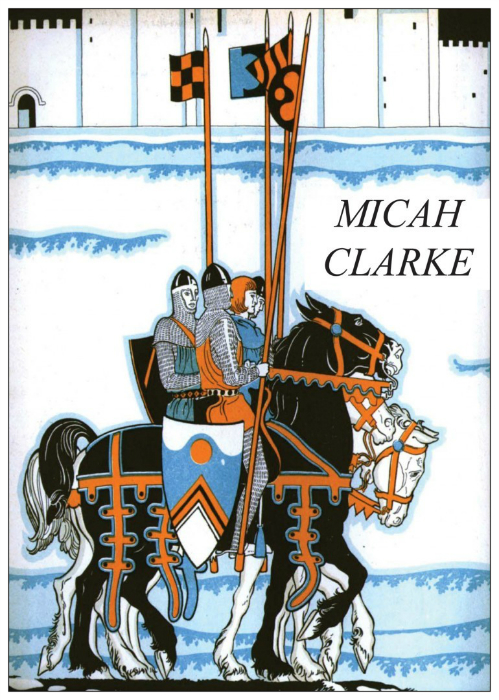
So, this being a book page,  I'll set aside that Doyle was a Cricket man, and that he nabbed a wicket from the Sherlock Holmes of Batsmen, the legendary W. G. Grace.  Yes,  although I'm a Cricket buff of sorts,  I'll dodge by that fab fact,  and I'll mention the another best thing about him;  he was one of the best scribblers of historical fiction that the world has ever known.  I'm always amazed when readers of the Holmes stories are unaware of his great novels of action and adventure.  Particularly his most famous historical novel, The White Company,  but also Sir Nigel,  Micah Clarke,  and even the fantastic Gothic mystery/boxing novel, Rodney Stone.

Honestly,  being eternally associated with an eternal, mythological figure like Sherlock Holmes would be enough to satisfy even the most ambitious of people,  but when I consider all of the things that Arthur Conan Doyle was in addition to this (in true Victorian style), I feel simultaneously intimidated and inspired.  It makes me want to work harder at my own valued endeavours.

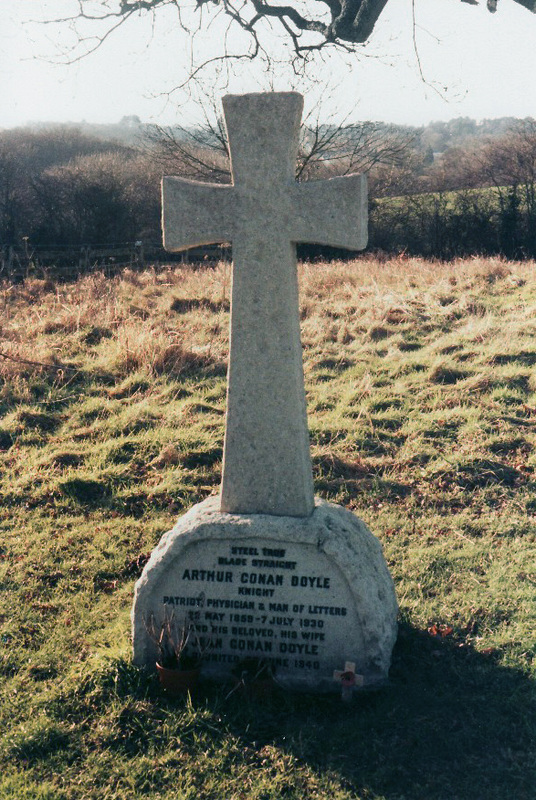
                                    Sir Arthur died on July 7th, 1930; his gravestone reads:

Steel True
Blade Straight
Arthur Conan Doyle
Knight
Patriot, Physician & Man of Letters
Picture
Picture
Picture
Picture
Picture

1 Comment

Manly Wade Wellman (May 21, 1903) ~ Happy Birthday!

5/21/2014

3 Comments

 
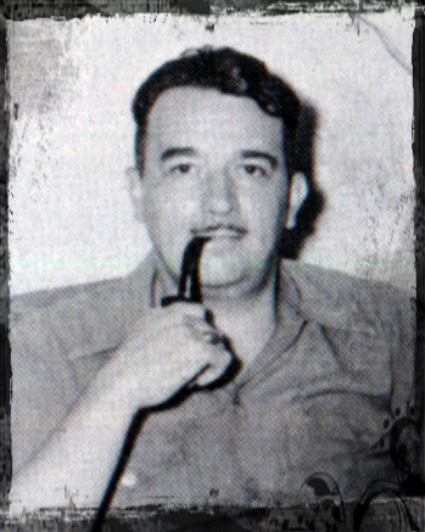
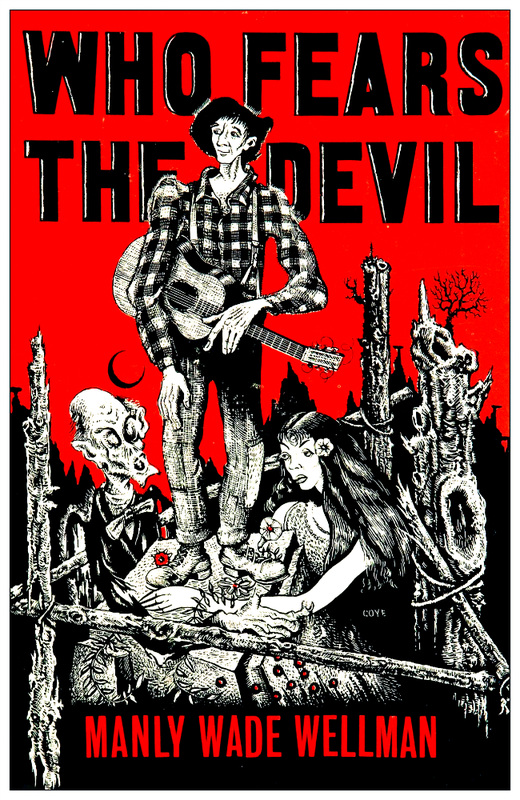
Today is the birthday of one of the most unique writers in the horror genre.  Manly Wade Wellman was born in a village in Africa on May 21, 1903;  later in life,  after many travels through the Ozark mountains,  he moved to North Carolina.  It was this path that transformed him into a writer of Appalachian short stories and novels.  His connection to the Ozark folklorist Vance Randolph, and through him, to the oldtime Banjo player Obray Ramsey, changed his life. Their stories and music took his already-established career, penning science fiction for the pulp magazines, in a rustic and imaginative new direction.

Although he wrote a variety of this type of story,  it was his regular characters that made his stories special;  they were colourful forces of good in a world of dark hollers and bewitched places
.  There was the scholarly man-about-town John Thunstone,  the Supernatural Detective, Judge Keith Hillary Pursuivant,  Civil War Sergeant "Bible" Jaeger (with his book, 'The Long Lost Friend'), as well as  Hal Stryker, and perhaps the best of all,  the hillbilly guitarist John, called 'Silver John" for the silver strings on his instrument.  There is so much imagination in these stories,  and inspired by Randolph's knowledge of the occult folklore of the southern mountains, he weaved magical webs of words.

That's not to say that Wellman was only a pulp writer.  He had a degree in English, as well as a law degree,  and he wrote a pile of scholarly non-fiction books and articles about the history of the south,  particularly of the Civil War.  Tolkien-like, this academic side of him certainly gave depth
to his supernatural tales.  In my opinion, only H. P. Lovecraft is his equal in this sort of thing.  His stuff is amazing.

    Wellman died on
April 5, 1986.  An incredible loss to the fanatical reader!

Click here for the  MANLY WADE WELLMAN website.  Great fun!
Learn about Vance Randolph HERE
Download an Obray Ramsey album HERE
Picture
Picture
3 Comments

Byomkesh Bakshi, Ibn-e Safi and the world of Desi Detectives

5/19/2014

1 Comment

 
PictureByomkesh Bakshi
In the common speech of the people of the Indian subcontinent, the Sanskrit-derived term "Desi" (pronounced "dey-see") is a catch-all for the people or things that originate in that region.  Desi countries include Pakistan, India, Nepal, Sri Lanka, and Bangladesh.  I think it's an amazing word;  it unites, through cultural commonalities,  a multitude of disparate groups that are often at odds politically...the obvious example being India and Pakistan.  It's a nice lens with which to examine and understand an amazingly diverse part of the world.

I came to Desi culture though a side door.  As a kid I was obsessed with Victorian and Edwardian English novels, especially those amazing tales of adventure set in what I perceived at that time to be "exotic, far-off lands".  Considering the fact that a significant portion of the globe was under the British thumb at the time those books were written,  I was exposed to quite a bit; the sun never sets on the British Empire, wot?  For better or worse, from a political perspective, the then-called "British Raj" (Raj means "reign" in Hindi') opened my eyes to a number of beautiful lands for the first time.

Of course,  everything was presented through the filter of a British mind;  most of the Desi-type characters I knew in those days, including Gunga Din and my beloved Rikki-Tikki-Tavi, were the product of an occupation.  As I grew and dug deeper,  I found it amazingly difficult to find literature and film directly from a Desi source.  Though it's tempting to blame patterns of racism, etc. inherent to such an occupation,  I've found that much of the difficulty can also be attributed to ethno-linguistic  provincialism;  there is simply not that much of this stuff available outside their areas of origin or in languages other than the original.

Picture
Thus,  being a huge consumer of detective fiction in that pre-internet world, I had always found "the East" to be, if one may pardon the expression, "inscrutable"  as far as any clear information went.  I had always heard that there were homegrown Asian detectives,  but most of what I'd heard about came from western sources.  Charlie Chan, Mr. Moto, and even Judge Dee, were the creations of  Caucasian writers (most of the Judge Dee stories were created by Robert Van Gulik).  Yet, in various detective fiction periodicals, I would get tantalising suggestions of Asian mystery; I mean, who wouldn't want to read Swapankumar's stories of the (reportedly) amazing detective Deepak Chatterjee,  who was, among other things, a polyglot martial arts expert?  Even now, when a few of those stories are accessable,  a knowledge of written Bengali would be the only way to enjoy these untranslated masterworks.

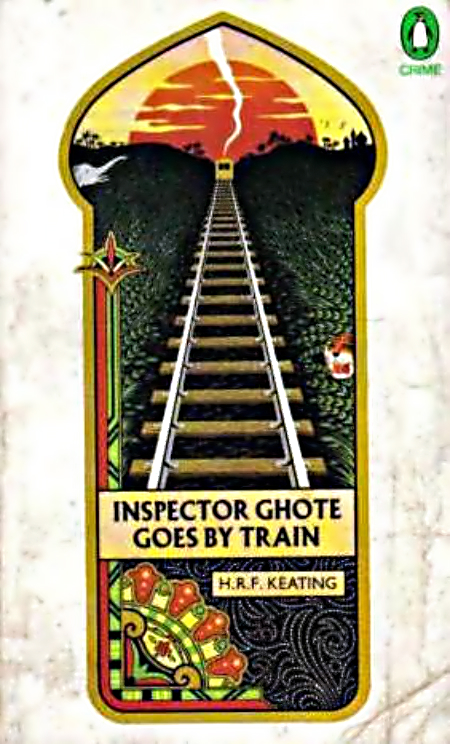
So, lacking any options, my first Desi-type detective was the unshakeable Inspector Ghote, also written by another Englishman,  H. R. F. Keating.  I loved the first one that I found, Inspector Ghote Goes By Train.  It was an amazing read!   Ghote is assigned the task of escorting a wily grifter by train from Calcutta to Bombay, and nothing goes exactly as planned...but in a highly entertaining and complex way.  It really was a great book,  but still not the genuine Desi article.  Still, hungry for that world,  I read as many of them as I could find.  Ghote remains one of my favourite characters in fiction, in spite of that minor issue of authenticity;  if I'm correct, Keating hadn't yet been to India when he wrote the first book! In any case, I was recently delighted to find that the filmmakers Ismail Merchant and James Ivory had made an Inspector Ghote film,  and that there was a 1983 episode of the British anthology series Storyboard featuring Ghote, as well as a number of wonderful radio dramatisations of the stories.

Picture
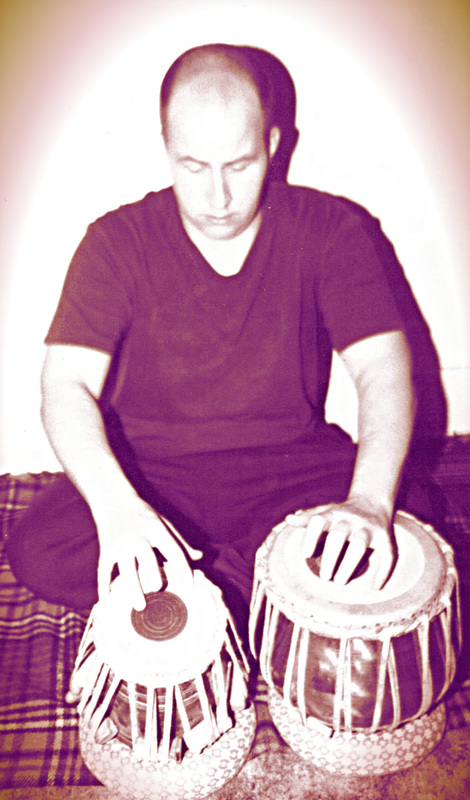
In my early twenties I finally had the access that I had longed for, and began to dig into the broader world of South Asian culture.  In the decades afterward I studied the Indian tabla with a variety of teachers (including the legendary Zakir Hussein), met the Shahen Shah (king of kings) of Qawwali music, Nusrat Fateh Ali Khan (through the Ethnomusicology department at the University of Washington), I bought a mountain of recordings of Carnatic kritis,  of Drupad,  Khyal, Ghazel, and Thumri,  and watched a ton of films in various Desi languages, my favourite being the Sindhi director G. P. Sippy's classic action masterpiece, SHOLAY ("maa ney tumhara namuk kaya hai, serdar...").   I learned a good deal of Urdu/Hindi/Punjabi (never could get a grip on Tamil), and finally ended up going to Pakistan (Lahore, Islamabad and Karachi), and India (Chennai, Mumbai, New Delhi, Lucknow, Amritsar and all points in between) several times, in a whirlwind of colour and excitement. It was during the initial portion of that period that an Indian friend loaned me a paperback collection of mystery stories by the Bengali writer Sharadindu Bandyopadhyay. 

Picture
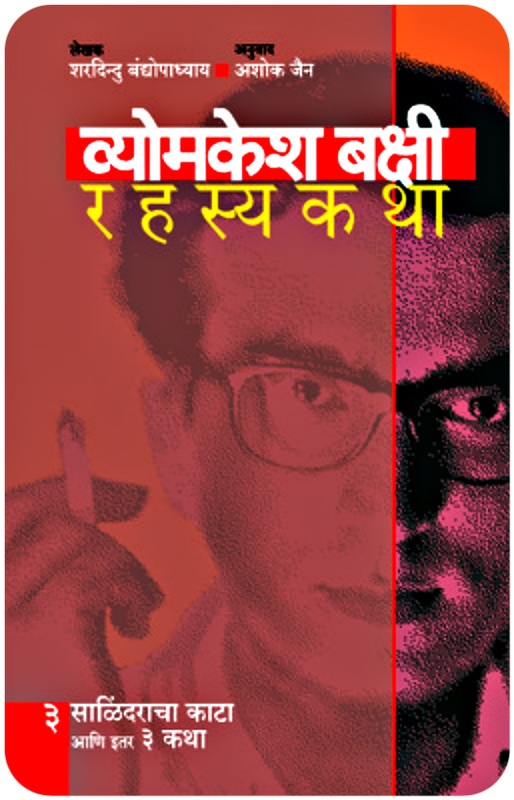
At last,  I had actual Desi mysteries in English!  The detective was the famous Byomkesh Bakshi the Satyanweshi, or "truth seeker", who solved puzzle-like crimes in over thirty stories written between 1932 and 1970, accompanied by his friend and observant Boswell, the excellently Dr. Watson-ish Ajit Banerjee.  I was trapped in my chair from page one; the translation really captured the ambiance of that world that I'd learned to love so well,  and the mysteries were both peculiar and satisfying.

Though Bandyopadhyay apparently bemoaned the "Englishness" of the Desi detectives written in the forty years before his time,  Byomkesh has a great many Sherlock Holmes-ish traits, though with a uniquely Desi flair.  He's an obsessive thinker, thrives on a complex problem, he delights in the mild confusion of his less-observant friend, and he paces about smoking (Cigarettes, not a pipe), when on a case.  Like every other mystery writer,  Bandopadhyay's writing was greatly inspired by Arthur Conan Doyle (as well as by Agatha Christie and G. K. Chesterson), so one can forgive a comparison or two. In the end, what transforms the archetype into a fresh character is both the context and the magical alchemy of Byomkesh's idiosyncrasies.

A great thing about these stories is that translations in English are easy to acquire;  a casual search online will lead to a variety of well-printed editions.  I'd really love to be able to read Sharadindu Bandyopadhyay's writing in the original Bengali; though the translations are evocative and highly readable,  there are hints of missing flavours that leave me longing for more.  The only Bengali word that I know, in fact, is Goyenda, meaning detective ("Jasoosi" in Nepali, Urdu & Hindi), and while appropriate to this context,  I lack the 9,999 other words needed for a satisfying reading experience.

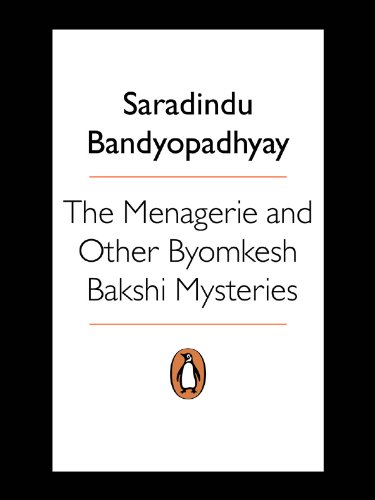
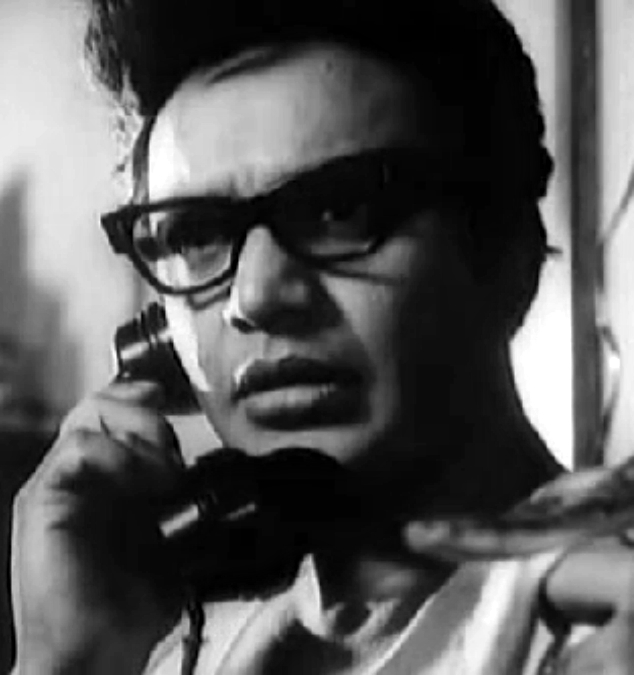
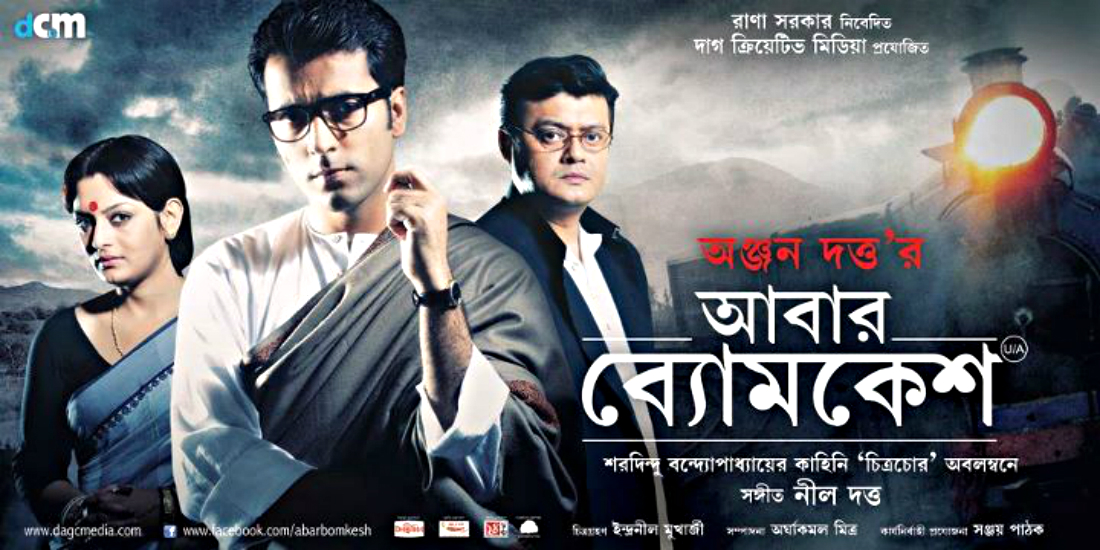
I've come to learn that Byomkesh is quite famous across the Desi universe,  and his detections have been made into a number of movies.  One of these, called  Chiriyakhana (meaning "the Menagerie"),  was made in 1967 by Satyajit Ray, one of the most famous Indian writers and movie directors of all time.  The film snobs, of course, consider it his worst film, probably because it is both fun and interesting;  I've seen it (and will review it soon), and I thoroughly enjoyed it. Since Chiriyakhana, the Byomkesh character has been featured in many other films,  and was also made into a well-liked television series.

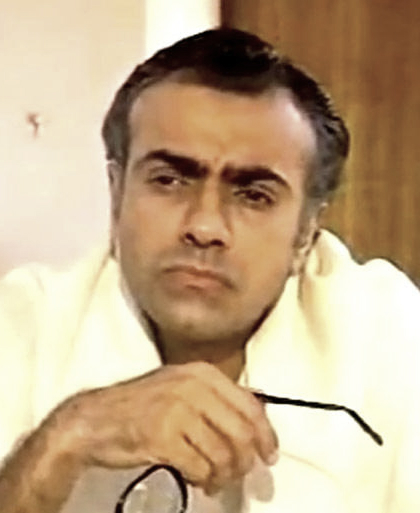
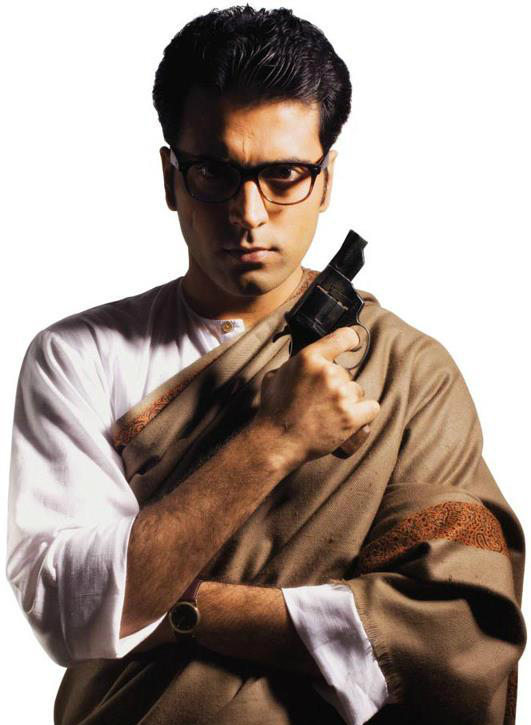
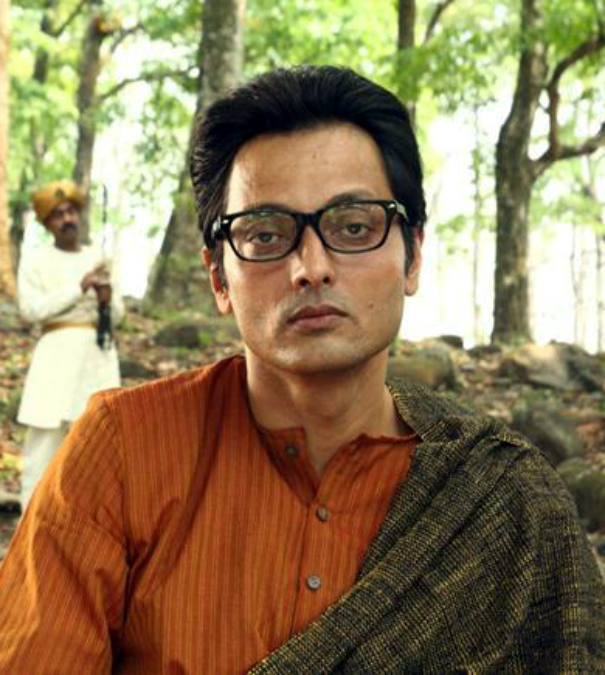
Some of the many film faces of Byomkesh Bakshi
Picture
Uttam Kumar
Picture
Rajit Kapoor
Picture
Abir Chatterjee
Picture
Sujoy Ghosh
Picture
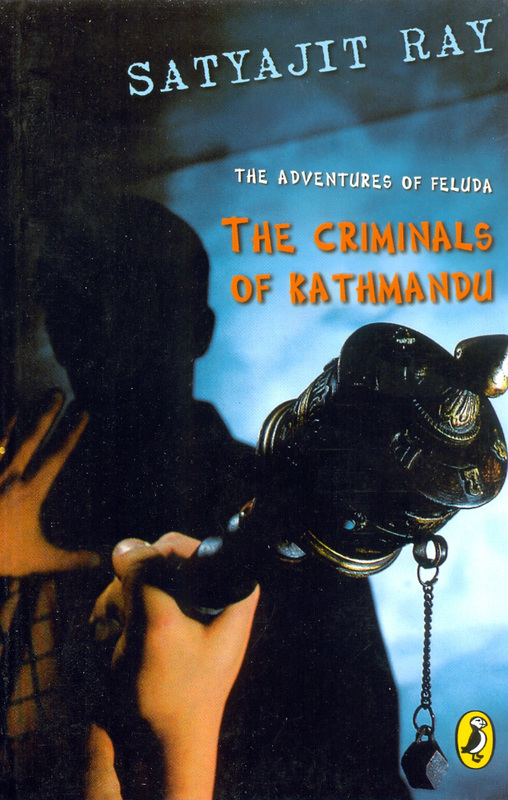
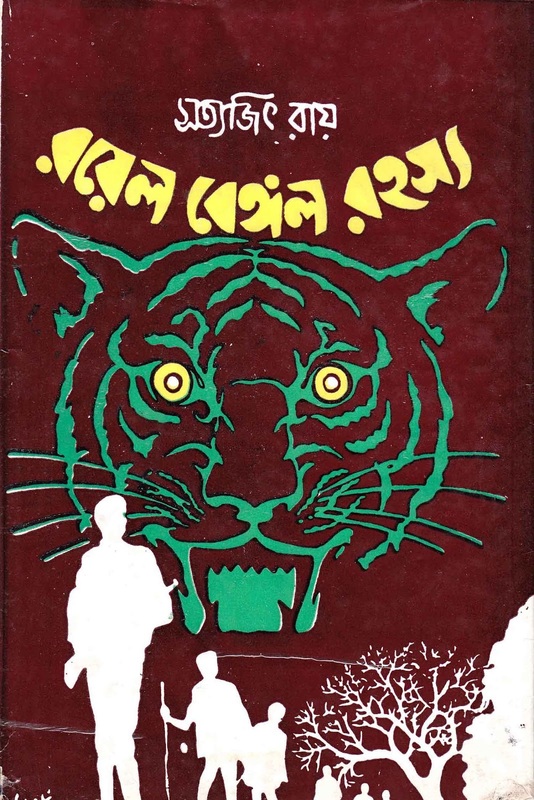
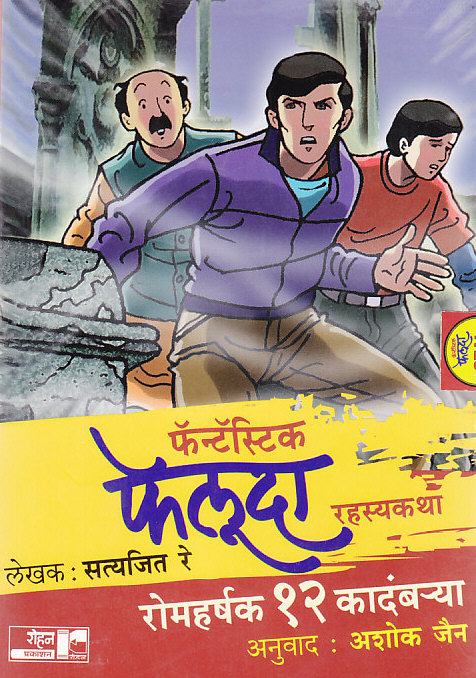
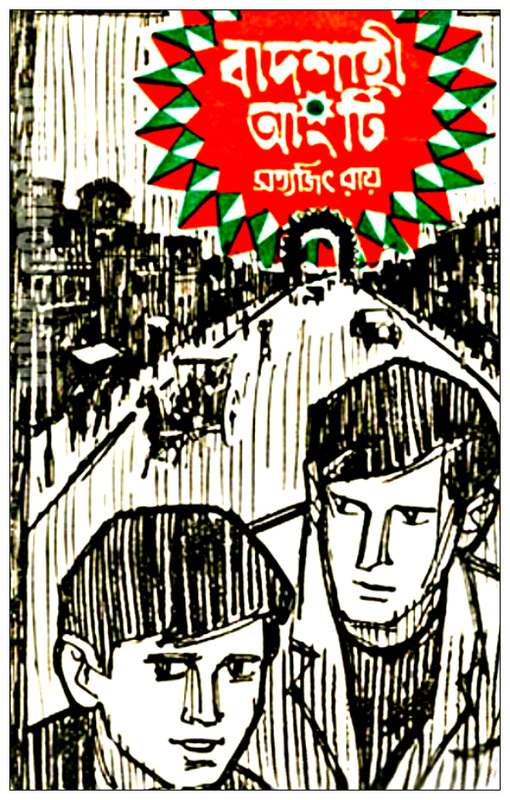
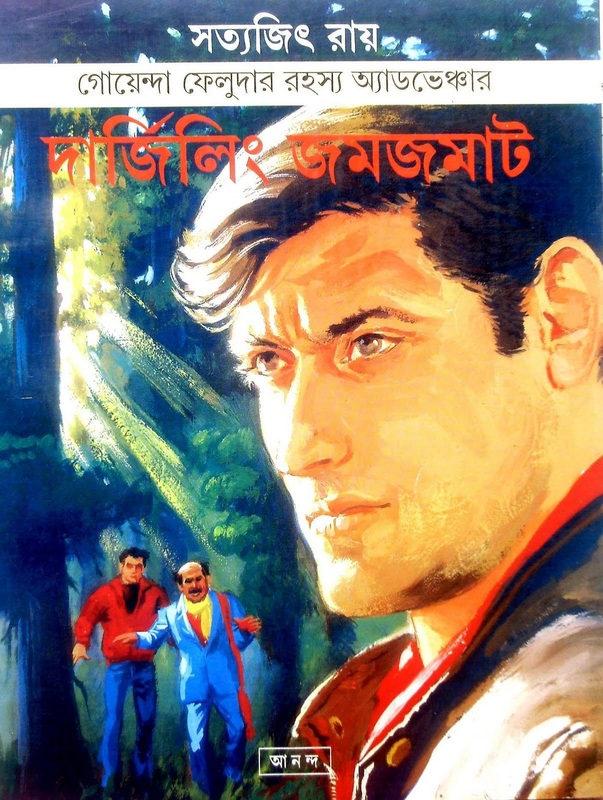
At that point in my pursuit of this kind of fiction,  my Indian and Pakistani friends were quite happy to make suggestions to me. I quickly found out that Byomkesh Bakshi was just the tip of a small, but entertaining iceberg.  A co-worker brought me a surprise one day, in the form of a mystery collection by the afore-mentioned Satyajit Ray, introducing another Bengali detective, Prodosh Chandra Mitra,  nicknamed Feluda.

Feluda is another very Holmesian figure;  he has as his Watson character his cousin Tapesh, he openly admires Holmes in the books,  and among many other things,  he lives at 21 Rajani Sen Road, in loving homage to 221B Baker street. Other than those fun nods to the master,  Feluda is very much his own man.  Though he prefers to use his powerful mind to solve a case (with what he reportedly refers to as his Magajastra or "brain weapon"), he's also a fearless man of action who carries a revolver and is skilled in the martial arts.

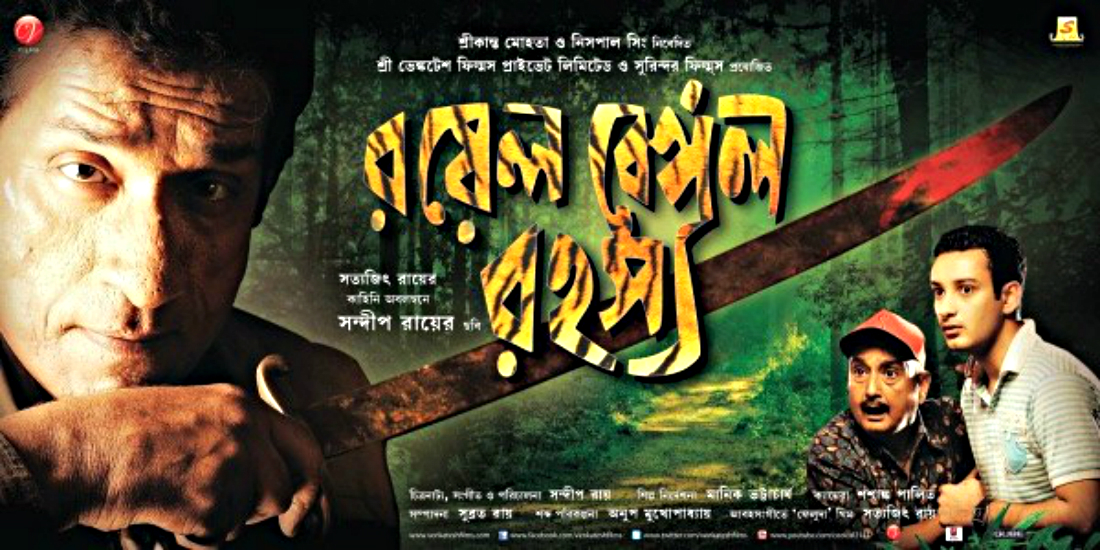
PictureA Feluda "Royal Bengal" mystery
Feluda is featured in over thirty novels and stories, as well as at least eight films (directed by Sandeep Ray, Satyajit Ray's only son), a number of radio dramas, and a multitude of television productions. 

After having seen so many of Satyajit Ray's movies (especially my favourite, Shatranj Ke Khiladi "The Chess Players", from 1977), I was stunned to find that he had a parallel career in writing detective fiction.  I would say, from what I've been able to ascertain,  that his writing life was as famous in the Desi world as that of his filmmaking...or at least as prolific and visible.  In fact, like the Byomkesh stories,  a great many of the Feluda tales are readily available in nice translations.

Picture
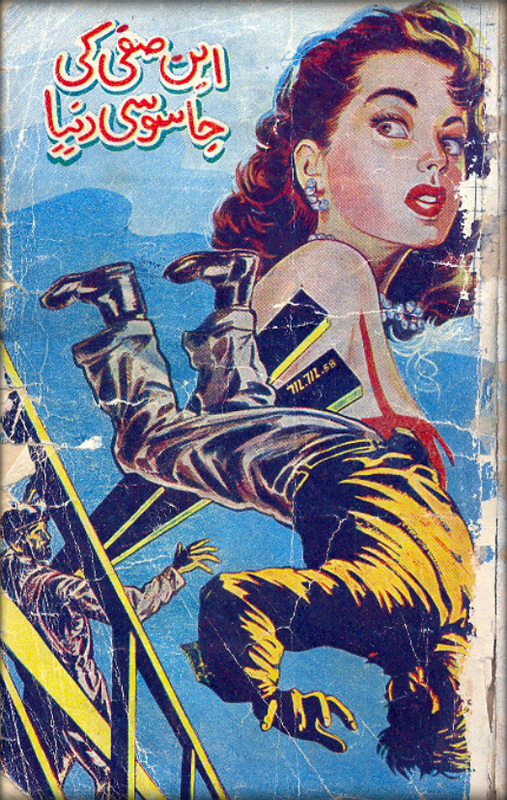
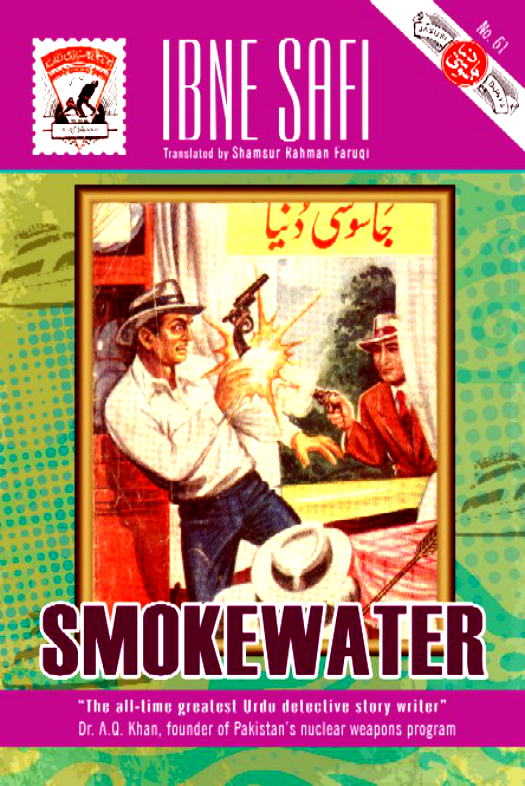
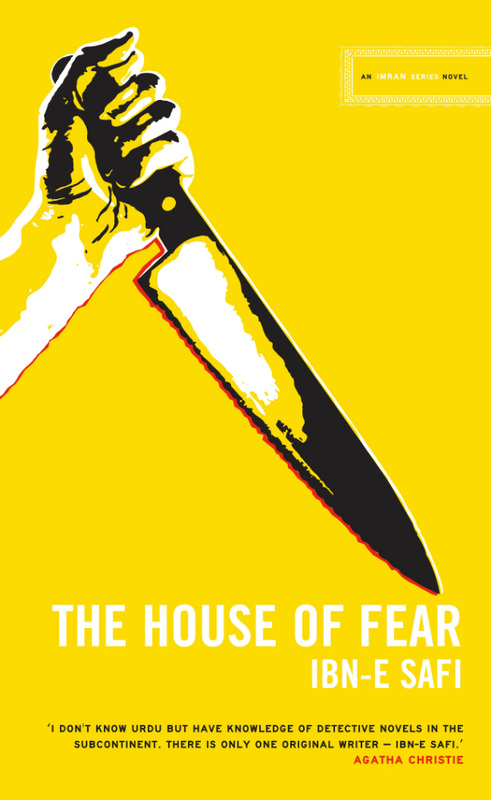
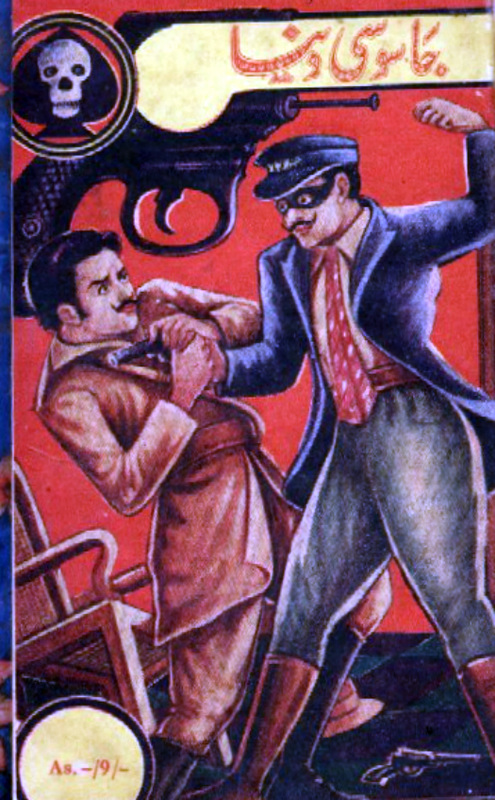
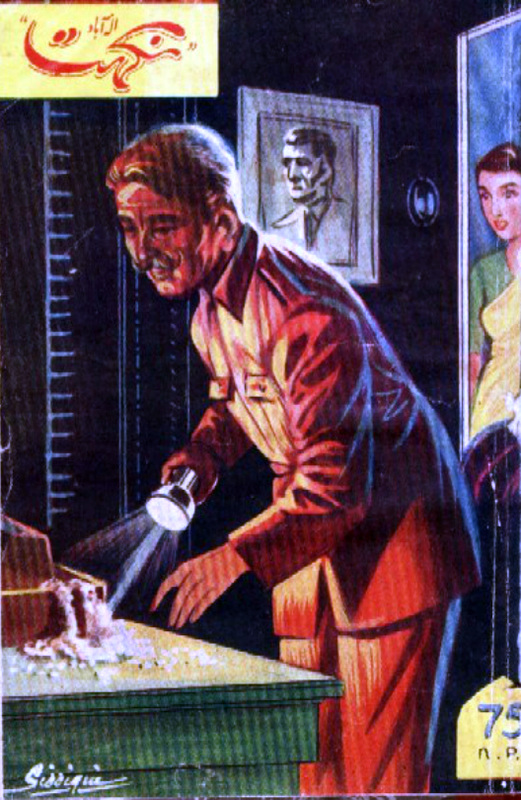
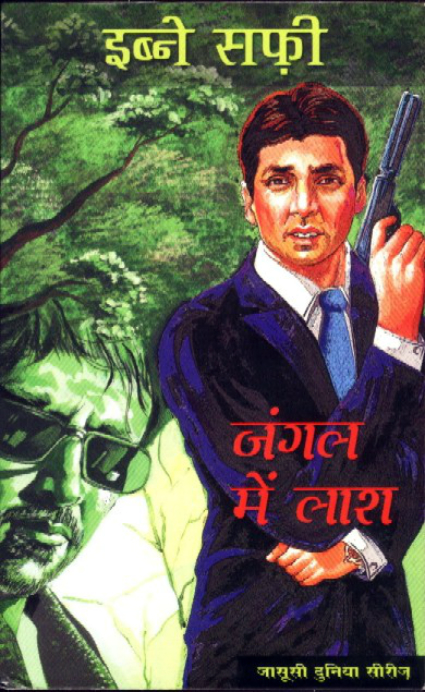
The final Desi writer that I'll share here is Ibn-e Safi, the nom de plume of Asrar Ahmad.  He was recommended to me very enthusiastically by several Pakistani friends.  Safi was insanely prolific;  he wrote 245 Urdu-language books throughout his lifetime, nearly equally divided between his two major series.  Those series are Jasoosi Dunya (The Detective/Spy World), featuring the dapper, Oxford-educated man-about town Inspector/Colonel Ahmad Kamal Faridi,  and the Imran series,  with the Handsome and eccentric Ali Imran, a P.H.D. in chemistry with a deceptively comical demeanor, who also happens to be X-2, the secret head of the secret service.

Being Pakistani,  both characters are stoutly Muslim,  as are their formidable sidekicks. As a Muslim myself, I like that. Colonel Faridi is backed up by the mischievously argumentative, yet fearless, Sergeant Hameed.  Hameed, though he amuses himself by irritating Faridi,  is, by all accounts, completely loyal...to the death.  Imran, as written by Ibn-e Safi,  has as his bodyguard the ex-boxer, Joseph Magonda;  a heavy drinking black African (as opposed to Desi African;  there is a huge population of Desi people all over Africa).  Joseph, though he came to Faridi by way of his having been defeated in a fight, is also dedicated to Imran, to the point of considering him his father.  Imran,  at the pen of Ibn-e Safi's successor, Mazhar Kaleem (who has written at least 500 books in the Jasoosi Dunya world!),  has as his disciple the devoted Rizwan, known as "Tiger".  Tiger is a martial arts expert,  and is so capable and so shadows his hero, that he's dubbed "Imran #2'.  Of course there are many other characters that support both Faridi and Imran in their adventures, who offer not only valued assistance, but also great narrative colour to the stories.


Both of these are highly enjoyable and unique reads overall.  Ibn-e Safi had a flair for finding the colour in a story,  and if a story begins to falter,  there is always some completely random element tossed in to spice it up.  I've read two Faridi books and one in the Imran series (though it wasn't by Ibn-e Safi, but by Mazhar Kaleem),  and I enjoyed all three of them.  Once again,  there are wonderful printings available online for very reasonable prices.

Of the writers I've mentioned,  I wouldn't suggest starting with Ibn-e Safi if you're only mildly exposed to South Asian culture;  his stuff is deep Desi, and a little background in the wild and peculiar world of the art of the subcontinent will go a long way in preparation for these potent fables.

Picture
Picture
Picture
Picture
Here are some of the many amazing Ibn-e Safi original covers:
Picture
Picture
Picture
Picture
Picture
Picture
There are many other wonderful Desi detectives that I haven't detailed here;  a part of this huge list would include:

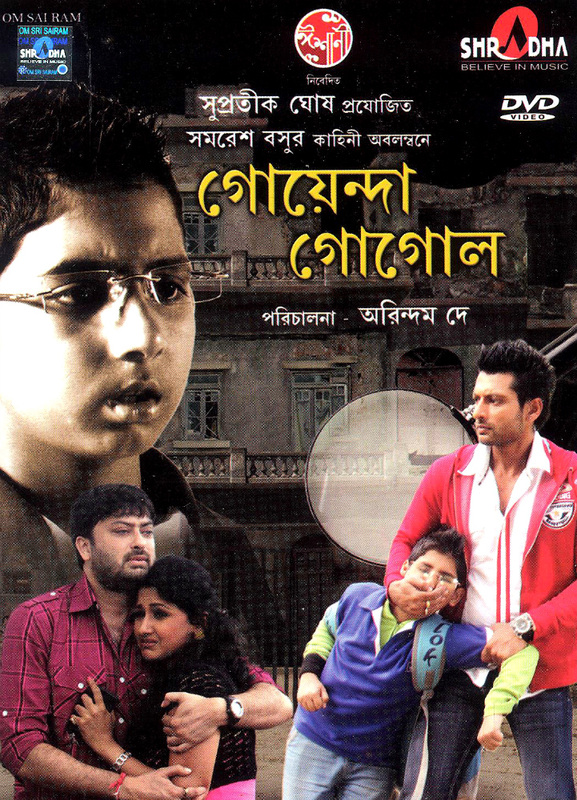
  • Samaresh Basu's child detective, Gogol, who has been dramatised in the 2013 film Goyenda Gogol,
  • The first female English detective in India,  written in the 1940's, Detective Janaki, by Kamala Ratnam Sathianadhan,
  • The two Tamil detective duos, Pattukkottai Prabakar's Bharat and Susheela, and Subha's (the joint pen-name of D. Suresh and A. N. Balakrishnan)  Narendran and Vaijayanthi, of the Eagle Eye  Detective agency,
  • and a quite recent Punjabi detective, the mustachioed rake Vish Puri, written by Tarquin Hall (an Englishman who, unlike H. R. F. Keating,  actually lives in India).

It occurs to me as I'm writing this, that though the British colonisation of India was a pretty insufferable period, some very English things were introduced that Desi people have truly made their own.  That the game of Cricket is insanely popular in all of those countries is a perfect example.  I'm gratified to see that a few good things, such as the detective story, were taken out of that situation and transformed into something uniquely South Asian;  I like to think that  British writers like Conan Doyle and Dame Agatha would be pleased by the charismatic works of their former colonial cousins.

Here are some useful links to more info about this amazing stuff;  I share them with gratitude to those that wrote all that interesting info.  I've been very lucky to find an access point into this great little universe, and I hope that you've found something here of interest.  It's been a long and interesting little branch of my life-path, and it really shows, in microcosm, how incredibly diverse the world really is.
  • Ibn-e Safi Website (in English)
  • Byomkesh Bakshi WIKI
  • Feluda WIKI
    • Goyenda Gogol WIKI
  • Imran series WIKI
  • Jasoosi Dunya series WIKI
  • Inspector Ghote WIKI
    • Vish Puri Website
Picture
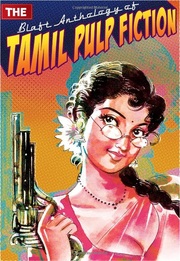
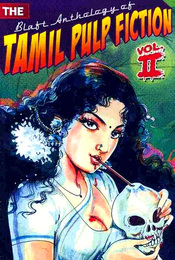
I'd also like to mention two great collections of translations of Tamil-language pulpy goodness,  the Blaft Anthologies of Tamil Pulp Fiction.  They're quite wonderful with a broad range of incredible stuff.  Both are available online, and are very reasonably priced!  Click on images for links.
Picture
Picture

Picture
Picture

1 Comment

THE OUTRIDER Series by Richard Harding
5/18/2014

3 Comments

 
Picture
Bonner had been the first. The first to get an old Dodge motor running well enough to venture out into the world. He had traveled, cautiously at first, through the continent finding groups of survivors—not many but enough to convince him that his work was worth doing. Slowly he began linking the bands together, building a network, trading information for supplies. Others had joined him. Leather came riding out of the dawn one morning and said he had been all the way to New York.  Gradually people had come to trust the Outriders, they were the closest thing to heroes the new world had.

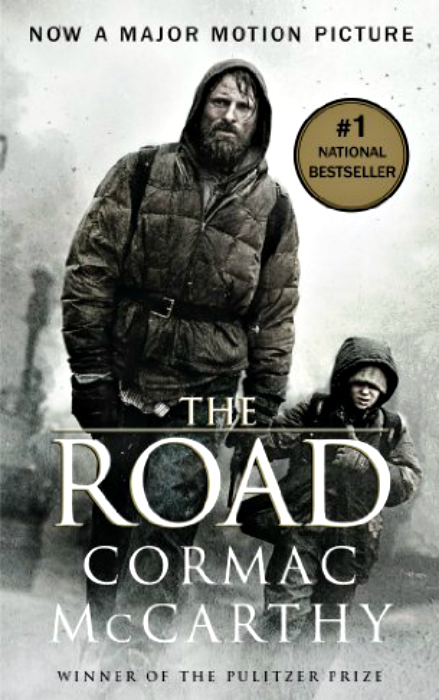
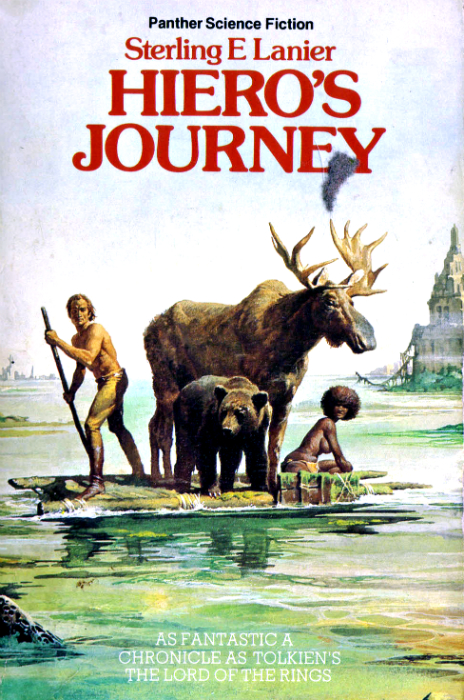
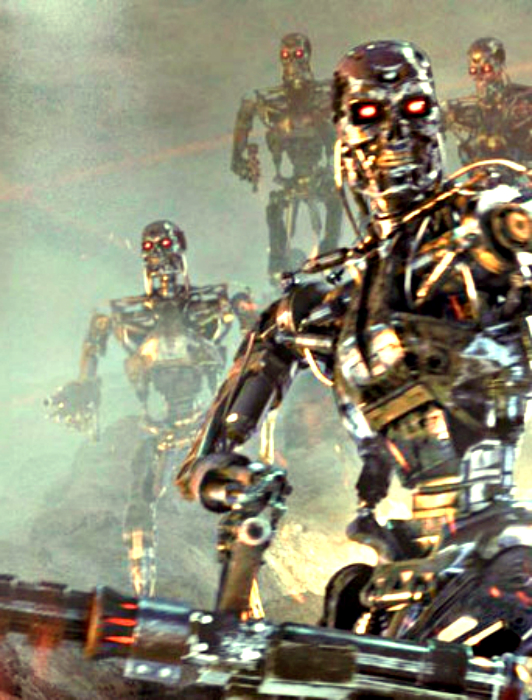
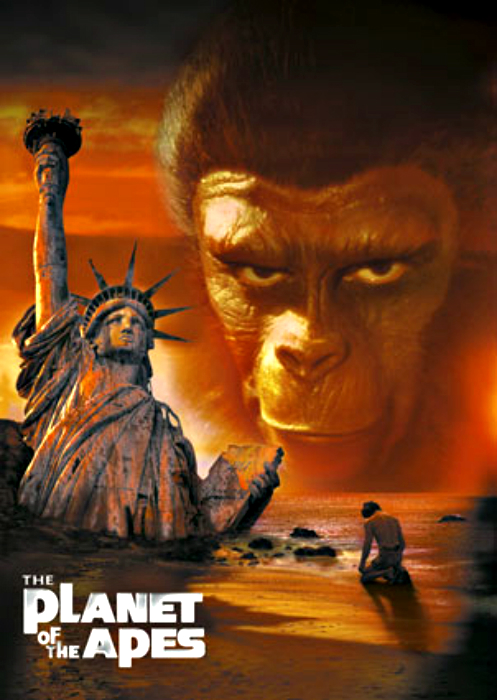
I'm a sucker for post-apocalyptic stories,  and I always have been.  I'm drawn to these stark, often morbid themes.  Epic films such as The Planet of the Apes,  The Terminator, The Road Warrior,  The Omega Man, and Panic in the Year Zero, the animated classic Thundarr the Barbarian, science fantasy novels such as Hiero's Journey, The Unforsaken Hiero, and A Canticle for Leibowitz, as well as the stunning Jack Kirby comic book Kamandi: The Last Boy on earth,  are some of my favourite narrative experiences.  In fact,  the relatively recent novel The Road, by Cormac McCarthy,  with it's stark, unromanticised view of the end-of-times, has become top on my list of legendary books.   In any media,  near-total destruction can be quite fun!
Picture
Picture
Picture
Picture
Picture
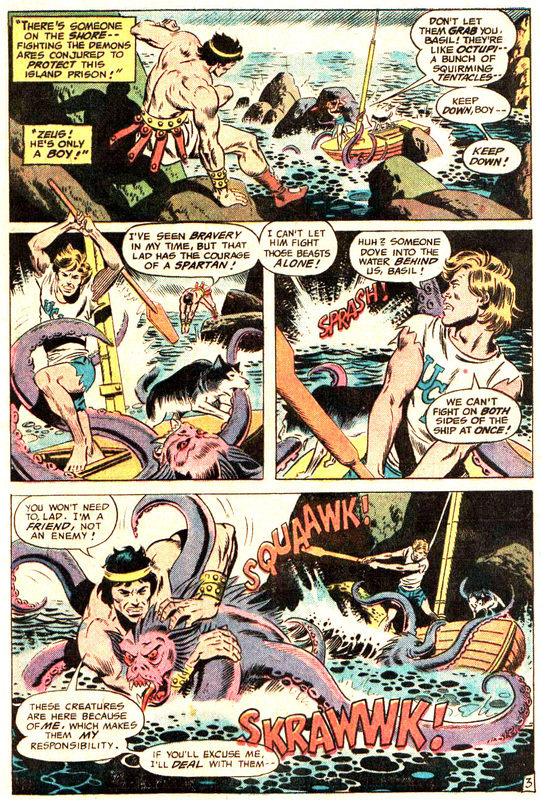
As mortifying as the subject matter might be in the real world, from the comfort and safety of a warm chair, it's just the thing to get my imagination going.  In fact,  my first memory of this type of imagery was the 1st issue of Hercules Unbound [above, left], in which the ancient demigod dashes about in a post-apocalyptic wasteland,  complete with creature-haunted ruins and gore-mad radioactive mutants!   It was 1975, and I was ten; only the two amazing Science fiction TV series The Outer Limits and The Twilight Zone did more to wonderfully scramble my kid-type brain.  In fact, both of those series have episodes dedicated to the post-apocalyptic experience.

PictureBonner, The Outrider
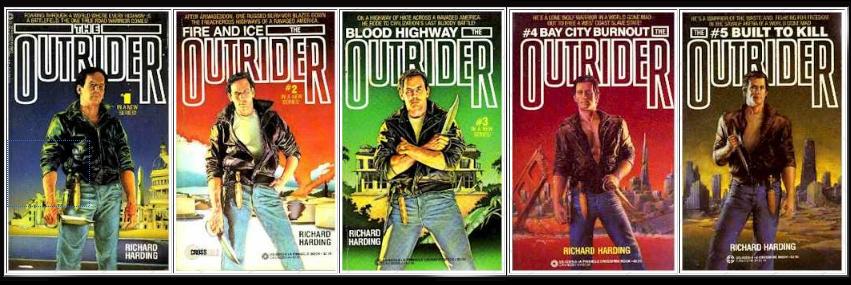
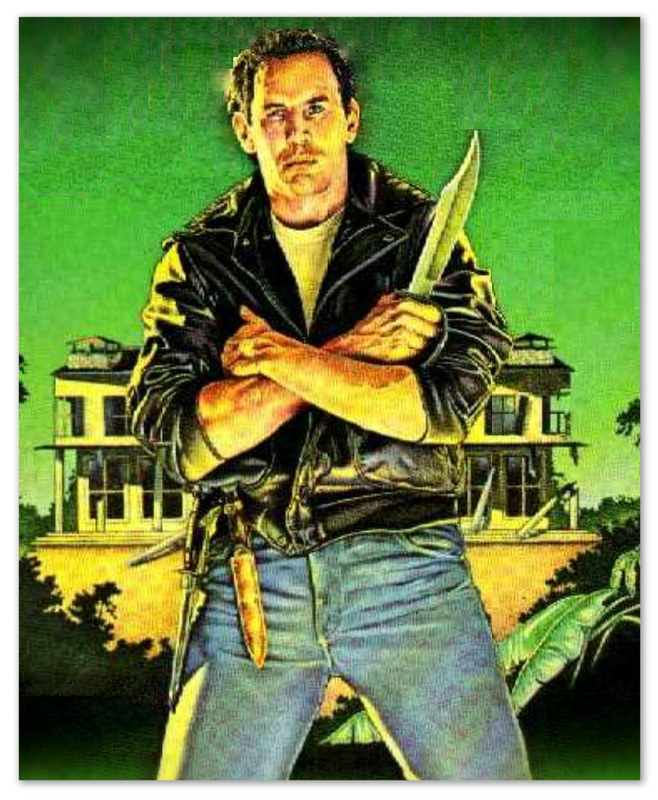
The Outrider series is very much in that universe.  Owing 99% of it's existence to the Australian science fiction classic Mad Max and its sequel, The Road Warrior,  the first of the five installments in The Outrider series was released in 1984.  Set in a harsh,  post-nuclear America,  the stories follow the exploits of the rugged warrior Bonner,  as he struggles for survival in a world with very few (if any) friendly faces.

Bonner's home base is Chicago,  or what's left of it,  and it sounds a bit like the Chicago of the 1920s;  gangsters, whores,  thieves,  and liars are plentiful,  and these shady qualities are often embodied in one individual.  Bonner fits in very well.  He's a classic anti-hero;  'goodness' (by the standards set by our cushy real lives) isn't necessary his default,  but he falls on that side more often than not. Because of this, the confrontations are many in the Outrider books;  they're pretty exciting overall,  with lots of of good killing and murderous mayhem.

Bonner is accompanied by two mountainous brutes called "The Mean Brothers".  They're a bloodthirsty pair,  carrying the axe and shovel Bonner gives them.  As the story goes along,  they unleash truckloads of whup-ass on whomever needs it,  and they seem to need quite a bit.  They add a tremendous amount of colour to an already colourful series;  every good futuristic adventure needs some kind of mutant-type characters, wot?

As far as what place the series holds in the overall literary universe, Vladimir Nabokov they are not;  that's what I enjoy most about them. Now, this is going to sound unflattering,  but to me,  they're refreshingly not well written. They feel as if a typical Hell's Angels biker sat down and wrote a book that his buddies would like to read.  The prose is pretty broad,  with lots of machismo,  and the characters are as crude and animated as those in a silent western film.  It's quick,  rough-around-the-edges stuff:

"Bonner placed his foot on Hatchet's stomach and yanked the deeply embedded knife from the man's body. He snatched off Hatchet's bandana, cleaned the blade, then slid it back into the holster resting on his hip. Two other knives rested there and the three black bone handles gleamed, as if smiling at the job done and waiting alertly for another chance to strike. The force behind Bonner's throw had been born of pure hate and, inwardly, he cursed himself for it. He could not afford to get worked up, not where Leatherman was concerned. He had to trust his instincts but keep anger out of things. Anger made you sloppy."
Picture
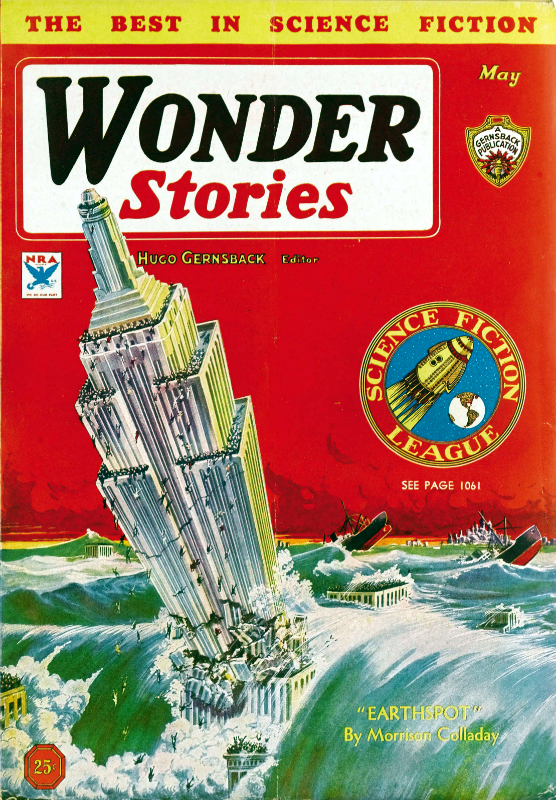
Like the paperback western novels on any grocery store magazine rack, they're basically a continuation of the pulp magazine tradition;  simply written,  brash, full of action and imagination.  The end of the modern world was an overwhelmingly common theme in the 40's-era magazines, and with the increasingly nihilistic vibe of the American political universe, the stories became more cynical and brutal as time went on.   I think that the Apocalypse-visionaries of the golden age of the pulp,  if they were to read any in the later stages of the theme  (especially MacCarthy's The Road),  they would be stunned by how emotionally dark the attitude of the country had become a mere fifty years later.

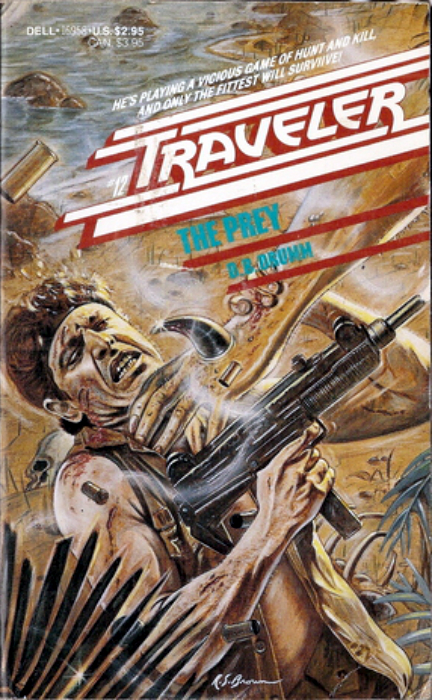
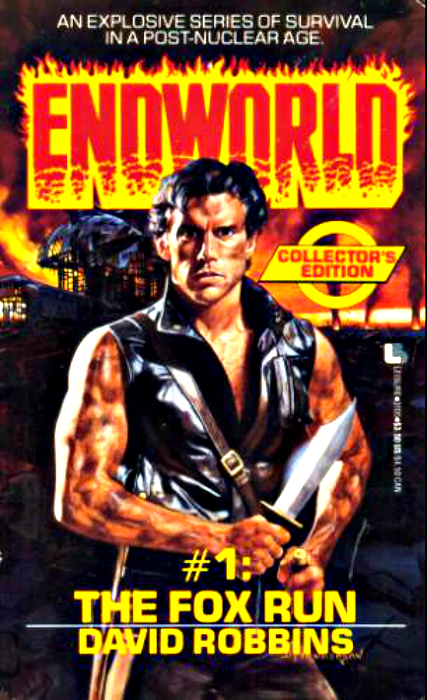
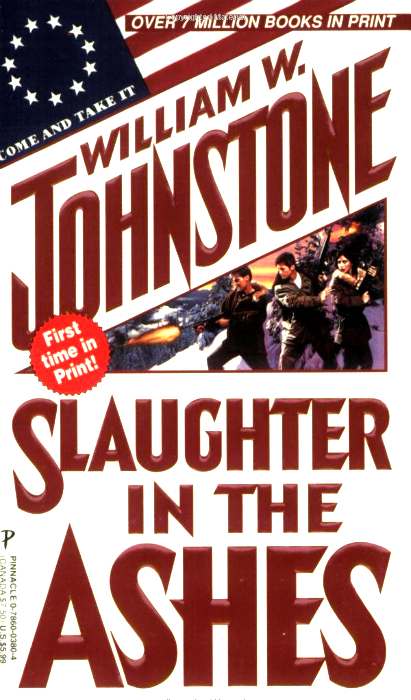
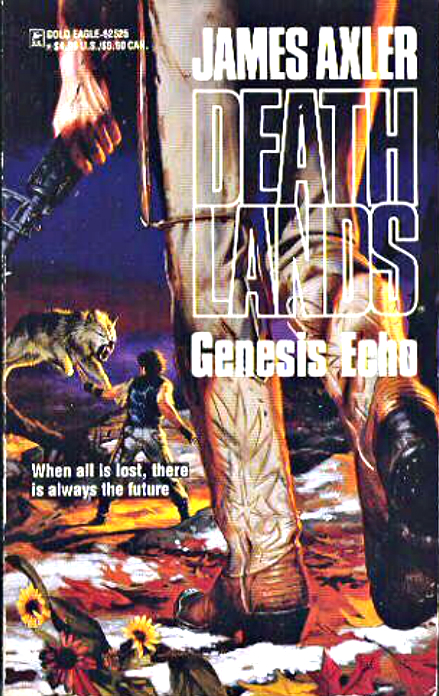
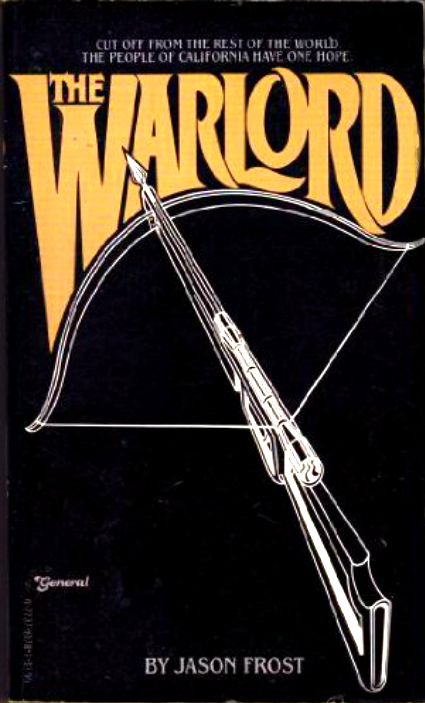
The Outrider is just one of many novels in the new apocalypse-pulp tradition.  Among them are James Axler's Deathlands & Outlanders series (Axler is the pen-name of comic book writer/novelist Mark ellis),  William Johnstone's Ashes series,  The Warlord series, by Jason Frost (a house name for the writers Raymond Obstfeld and Rich Rainey),  David Robbins' Endworld, The Traveler, by D. B. Drumm (another house name used for sci-fi writer John Shirley),  and many others of greater or lesser degrees of notoriety.  All of them have one thing in common;  they follow a hardened character through a desperate struggle to survive a "world gone mad".  In the present day, in which "doomsday preppers" are a genuine subculture, they have a built-in fan base.

Picture
Picture
Picture
Picture
Picture

I was able to re-acquire all five of the The Outrider books easily and quite cheaply on Amazon.com.   Of the novels of that I have read of its kind,  this one appeals to me the most;  It has a real sense of the adventurous side of apocalyptic fiction, and with the addition of the Mean Brothers,  a dash of rakish excitement.

I recommend them for good, rustic action-packed fun.

Picture
(click)
3 Comments

    THE LIBRARY

    All
    Arthur Conan Doyle
    Biggles
    BIRTHDAYS
    Byomkesh Bakshi
    Desi Pulp
    Feluda
    Ibn-e Safi
    Imran Series
    Indian Detectives
    Inspector Ghote
    Jasoosi Duniya
    Mad Max
    Manly Wade Wellman
    Post-Apocalyptic
    Richard Harding
    Road Warrior
    The Outrider Series
    The Road
    W. E. Johns


    Picture

    RSS Feed

Powered by Create your own unique website with customizable templates.